

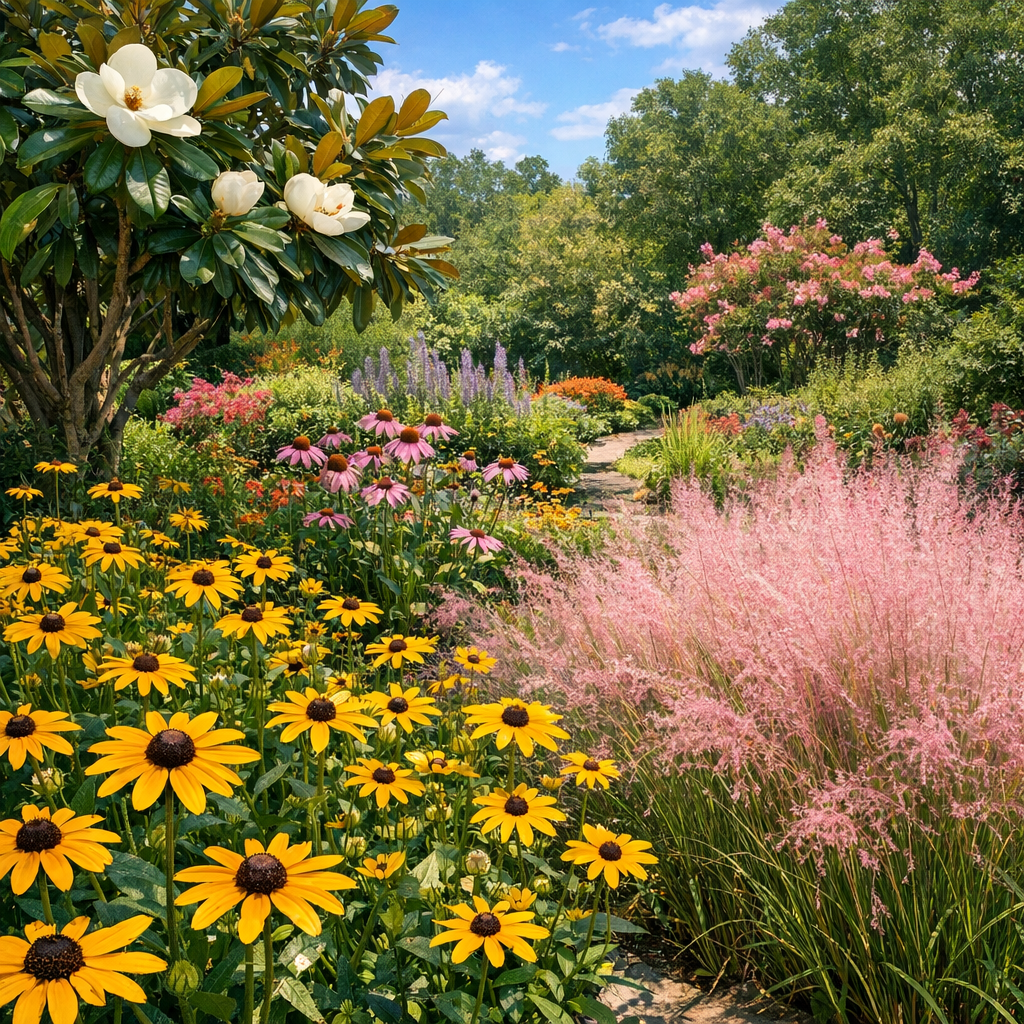
Alabama’s diverse landscapes, from the Gulf Coast to the Appalachian foothills, are home to a rich variety of native plants. Incorporating these species into your garden not only enhances its beauty but also promotes environmental sustainability.
Why Choose Native Plants?
Native plants have evolved over thousands of years to thrive in Alabama’s unique climate and soil conditions. This adaptation offers several advantages:
- Low Maintenance: Once established, native plants require minimal watering and fertilization, reducing the need for chemical inputs.
- Wildlife Support: They provide essential habitats and food sources for local wildlife, including pollinators like bees and butterflies.
- Soil Health: Deep-rooted native species help prevent soil erosion and improve soil structure.
Top Native Plants for Alabama Gardens
Wildflowers
- Black-eyed Susan (Rudbeckia hirta): Bright yellow petals with dark centers, blooming from June to October.
- Wild Bergamot (Monarda fistulosa): Lavender flowers attracting bees and butterflies, blooming in mid to late summer.
Trees and Shrubs
- Southern Magnolia (Magnolia grandiflora): Evergreen tree with large, fragrant white flowers.
- American Beautyberry (Callicarpa americana): Deciduous shrub known for its vibrant purple berries in the fall.
Grasses
- Muhly Grass (Muhlenbergia capillaris): Ornamental grass with pinkish-purple plumes in the fall.
- Little Bluestem (Schizachyrium scoparium): Warm-season grass with blue-green foliage turning reddish-orange in autumn.
Planting Tips
- Site Selection: Choose plants suited to your garden’s specific conditions, such as sunlight exposure and soil type.
- Planting Time: Fall is ideal for planting native species, allowing roots to establish before summer heat.
- Watering: Water regularly during the first growing season; once established, native plants typically require less irrigation.
By integrating native plants into your garden, you contribute to preserving Alabama’s natural heritage and create a resilient, low-maintenance landscape that benefits both people and wildlife.